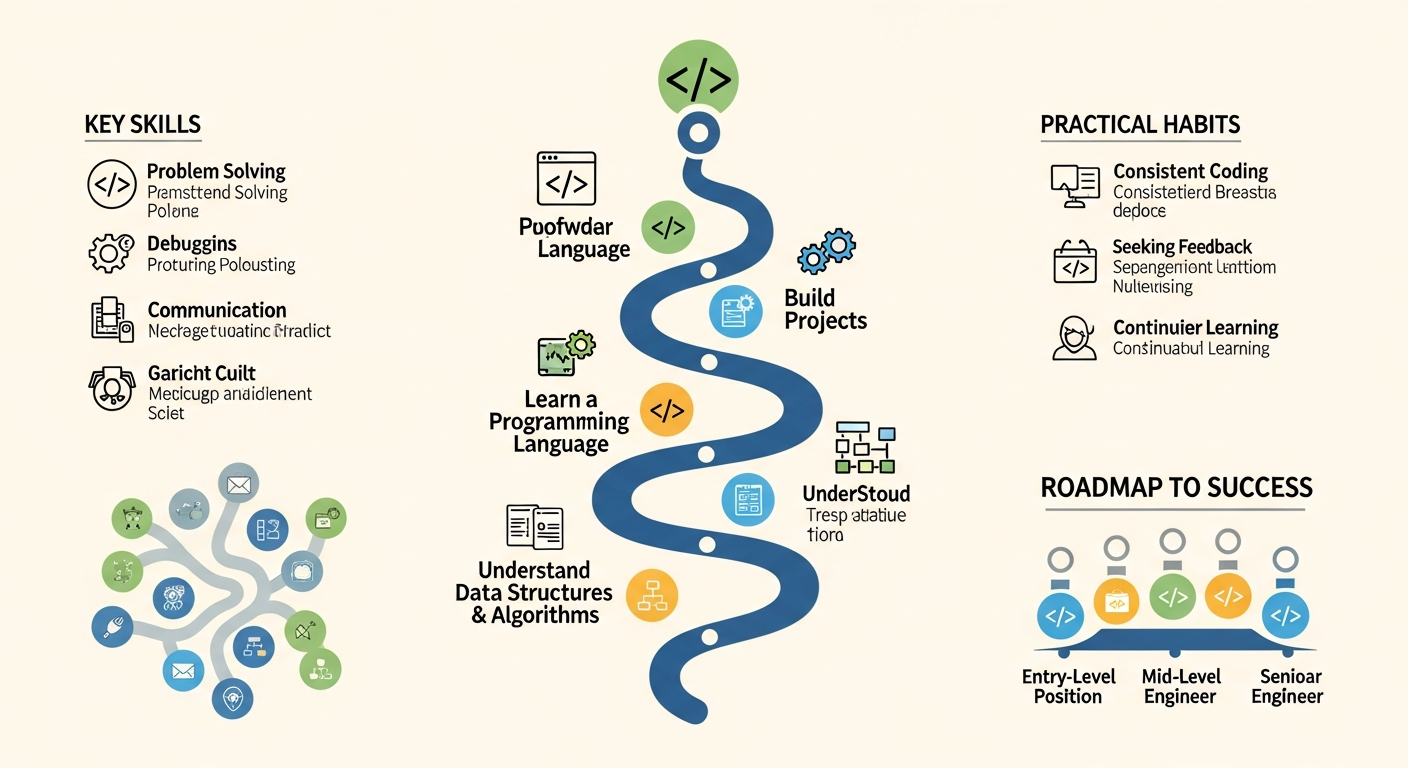
A future in software engineering attracts millions, because it offers creativity, financial growth, and global career security. Many learners ask how to become a software engineer without confusion or wasted effort. This guide provides a clear step-by-step path, skill breakdown, practical habits, and roadmap to reach professional success confidently.
How to Become a Software Engineer Step by Step
Understanding how to become a software engineer requires structured learning, hands-on projects, industry understanding, and long-term skill development. Aspiring professionals grow faster when they start with fundamentals, build real projects, and engage with problem solving daily. This section outlines each actionable stage of the journey.
Learning the Fundamentals of Programming
Strong foundations shape every successful software engineer. Beginners start with core languages like Python, Java, or JavaScript due to their readability and project versatility. Practice regularly, and explore data types, loops, functions, and object-oriented programming. Over time, understanding algorithms, logic patterns, and debugging improves coding confidence and technical flow significantly.
Choosing the Right Specialization in Software Engineering
Career direction becomes clearer when you explore specific fields. Many choose web development, mobile apps, AI, game development, cybersecurity, DevOps, or cloud engineering. Explore several areas early, because diverse exposure strengthens decision-making. Eventually, specialization builds authority, portfolio depth, and better job opportunities in competitive environments.
Building Hands-On Coding Experience
Practice transforms theory into real ability. Create applications, contribute to open-source repositories, and build small scalable tools. Gradually project complexity increases, which sharpens design thinking and architecture understanding. Furthermore, a portfolio showcasing projects, GitHub commits, and deployed applications builds credibility and attracts hiring managers efficiently.
Mastering Software Engineering Tools and Technologies
Skill growth accelerates when you work with modern development tools. Version control systems like Git streamline teamwork. Integrated Development Environments simplify coding and debugging. Knowledge of databases, APIs, and cloud platforms boosts versatility. Continuous integration tools enhance professional workflow efficiency, while containerization improves application deployment quality.
How to Become a Software Engineer Without a Degree
Many engineers succeed without formal education. Self-learning through documentation, interactive platforms, bootcamps, and personal roadmaps opens doors. Employers value skill more than certificates. Demonstrate ability using real projects, logic clarity, communication strength, and consistent growth. Show passion through steady improvements, hackathons, and technical problem solving challenges.
Developing Problem-Solving Ability and Logic
Software engineering thrives on analytical thinking. Solve coding challenges daily, break problems into components, and test solutions through iterations. Try algorithms, data structures, sorting methods, and optimization techniques. Eventually logic skills become automatic, improving debugging, architectural decisions, and software efficiency. Growth happens gradually, but practice ensures expertise.
Understanding Data Structures and Algorithms
Engineers handle data constantly. Lists, stacks, arrays, trees, and graphs shape processing logic. Algorithms define task execution quality. Efficient solutions reduce memory use, processing cost, and response time. Consequently, technical interview success increases when algorithmic knowledge is strong, because employers evaluate thinking ability beyond syntax.
How to Become a Software Engineer Through Projects
Projects represent proof of talent. Build weather apps, chat systems, e-commerce stores, task managers, portfolio sites, or automation scripts. Show technical depth with API integration, authentication, responsive design, and database storage. Eventually complete one large-scale project that includes production-ready structure. This becomes portfolio highlight material.
Improving Soft Skills for Software Engineer Success
Great engineers communicate clearly, write documentation, and collaborate seamlessly. Soft skills matter as much as code quality. Participate in team discussions, ask questions confidently, and give helpful feedback. Adaptability, leadership, and time management influence long-term career growth. Over time, these skills build strong workplace trust.
Preparing for Software Engineering Interviews
Interview preparation demands strategy. Study data structures, system design, OOP patterns, and logical reasoning. Practice live coding challenges under time pressure. Furthermore, write clean and readable code, explain logic clearly, and handle follow-up questions calmly. Many companies prefer candidates who communicate thought processes effectively.
Creating a Strong Resume and Portfolio
Presentation shapes hiring success. Highlight programming languages, tools, achievements, and project ownership. Showcase GitHub activity, application demos, and problem-solving examples. Keep layout simple, modern, and easy to scan. Employers appreciate measurable impact, such as performance improvements or features delivered. Always align resume keywords with job description needs.
Gaining Experience Through Internships
Internships accelerate real-world understanding. Work under experienced developers, study workflow patterns, handle tickets, and collaborate through code reviews. Each completed task increases confidence. Continuous learning during internships builds professional readiness. Eventually, hands-on environment exposure creates a smoother transition into full-time engineering roles.
How to Become a Software Engineer With Continuous Learning
Technology evolves constantly. Engineers learn new frameworks, programming styles, and architectural methods throughout their careers. Explore cloud computing, microservices, AI tools, and deployment automation. Read documentation, attend workshops, and follow industry discussions. Regular learning keeps skills valuable, which ensures future-proof job security.
Salary Expectations and Career Growth in Software Engineering
Software engineering provides competitive salaries with growth potential. Income increases when skills expand, specializations deepen, and responsibility grows. Promotions lead to roles like senior developer, tech lead, solution architect, or engineering manager. Because the industry evolves, staying updated becomes essential for maximizing earning potential.
Why Software Engineering Is a Smart Career Choice
Engineering careers offer creativity, purpose, flexibility, and global demand. Software influences every modern industry. Therefore career stability remains strong. Problem solvers enjoy endless innovation, automation challenges, and digital transformation work. Eventually passion, skill, and consistency lead to respected expert status.
Conclusion
A software engineering career rewards persistence, curiosity, and continuous improvement. You now understand how to become a software engineer through fundamentals, specialization, projects, interviews, and lifelong learning. Start today, sharpen your skills weekly, and build ambitious projects. Your future as a professional engineer begins the moment you commit to action.
FAQs
1. How long does it take to become a software engineer?
Time varies, but consistent learning and projects can build job-ready skills in months. Practice and experience shape speed.
2. Which skills are most important for beginners?
Programming logic, problem solving, data structures, and version control matter most at the start.
3. Can I become a software engineer without experience?
Yes. Build projects, contribute to open-source, and create a strong portfolio to showcase your skills.
4. Do I need advanced math?
Basic algebra and logical reasoning help, while some fields like machine learning require deeper math later.
5. What is the first step to begin?
Choose one beginner-friendly language, then practice daily while building small real-world projects.