Coincidence or Keikō? The Comic Theory That Connects Every Impossible Clue
By Abdus Salam
53 Views
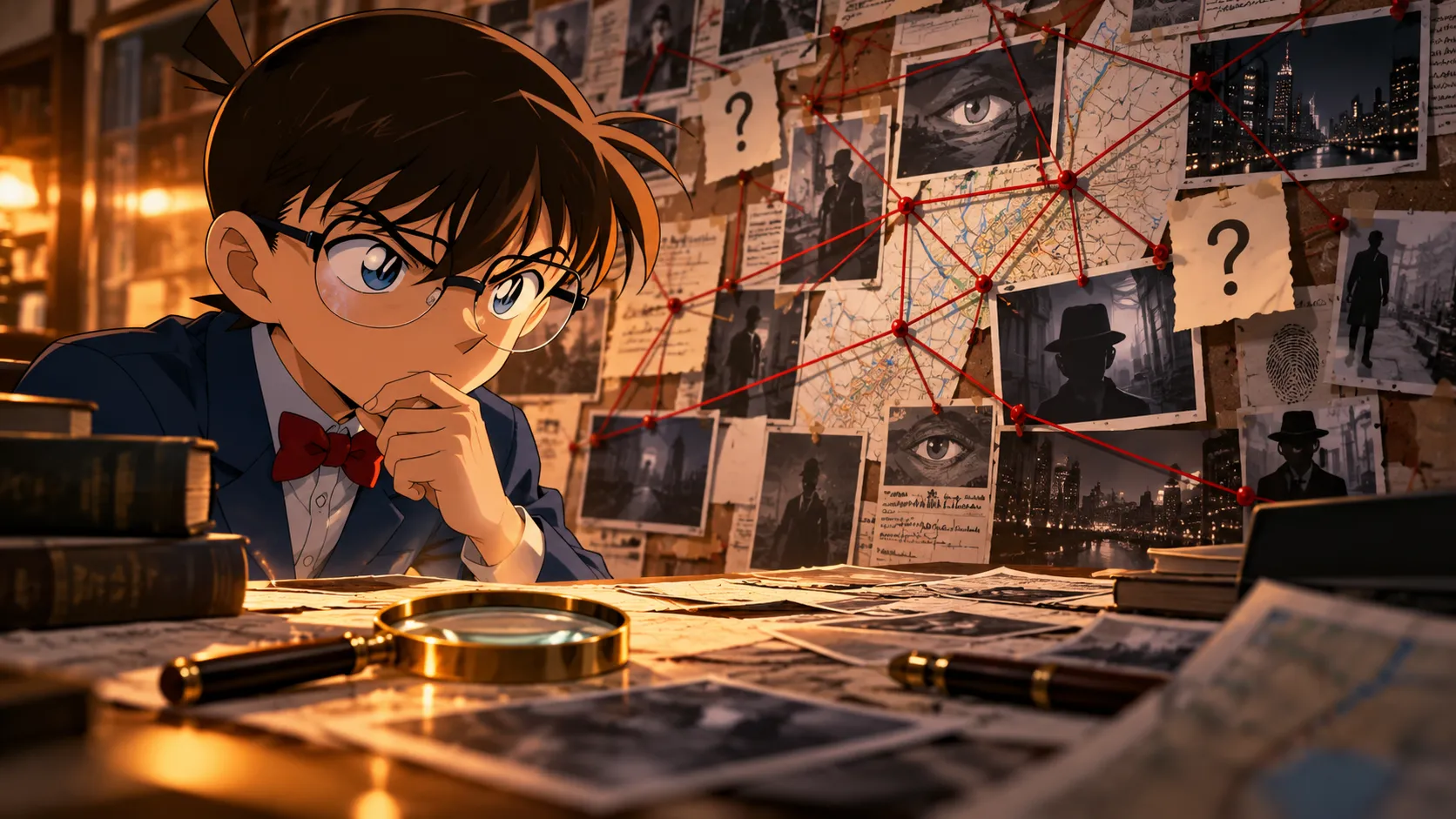
Ever noticed how a comic can drop five seemingly random details across ten chapters, only for one tiny reveal to make everything suddenly click? One character mentions a broken watch, another keeps avoiding a certain street, and some random symbol appears in the background like it has absolutely no business being there. At first, it all looks like a bunch of unrelated nonsense. But what if those details are connected? That's the question behind the Keikō Theory, a fan-style approach to spotting recurring patterns and hidden connections in a story. Readers revisiting chapters on platforms like komiku might discover that what looked like coincidence could actually be the author's way of leaving breadcrumbs for a much bigger reveal.
So, What Exactly Is Keikō?
The word keikō can have different meanings depending on its Japanese spelling and context, so it's important not to treat it as one universally established storytelling term. For this theory, though, we're using it as a name for the habit of noticing repeated patterns, strange coincidences, and details that seem impossible to explain individually.
Think of it as connecting the dots without immediately deciding what the final picture has to be.
A character always appears whenever a certain symbol shows up. A specific phrase gets repeated by people who have supposedly never met. An event from the past somehow mirrors something happening in the present. Each detail might have a perfectly normal explanation on its own, but together, they start looking suspicious.
The fun part is figuring out whether the pattern is intentional or whether readers are just getting carried away with their detective energy.
When One Coincidence Is No Big Deal
Let's be honest: not every repeated detail is a secret message from the author.
A character wearing the same jacket across several chapters might simply be wearing their favorite jacket. A broken clock could just be part of the background. Two characters using the same expression might reflect ordinary dialogue rather than some massive hidden connection.
The problem starts when readers treat every similarity as proof of a theory.
A stronger approach is to ask three basic questions. Does the detail appear more than once? Does it show up during important moments? And does its appearance connect to other information in a meaningful way?
If the answer is yes to all three, it's worth investigating. If not, it might be better to leave that particular clue alone.
Good theories aren't built from the number of suspicious details someone can collect. They're built from how well those details explain the story.
The Repeated Symbol That Refuses to Disappear
Visual clues are especially interesting because comic creators can hide them without interrupting the dialogue.
Imagine a small black flower appearing in the background of several important scenes. The first time, it's sitting on a table. Later, it appears on a character's clothing. Then, during a flashback, the same flower shows up beside someone who supposedly had no connection to the main conflict.
Now that's worth noticing.
Maybe the flower represents a secret organization. Maybe it connects different generations of characters. Or perhaps it marks places where something important happened in the past.
The trick is to compare its appearances instead of guessing immediately. Who is present? What happens in the scene? Does the flower appear before a major event or after one?
When baca komiku becomes part of a rereading session, keeping track of those repeated visual details can make earlier chapters feel completely different. A background object that seemed meaningless might suddenly become the missing link between two seemingly unrelated plotlines.
The Character Who Knows Something They Shouldn't
Sometimes, the strongest clue isn't an object. It's a character acting like they already know the ending.
They might react strangely to a name they've supposedly never heard. They could avoid a location before anyone explains why it's dangerous. Or they might predict an event with such specific details that ordinary intuition doesn't seem like a convincing explanation.
There are several possible reasons for this behavior.
Maybe the character has been hiding information. Maybe someone told them more than the reader knows. Perhaps they're connected to an earlier timeline, a secret identity, or an event that hasn't been revealed yet.
But there's another possibility: the character is deliberately planting misleading information to make everyone else draw the wrong conclusion.
That's why behavior matters just as much as dialogue. A character's words might sound innocent, while their reactions quietly suggest that they understand much more than they're willing to admit.
Can Impossible Clues Reveal a Hidden Timeline?
Now let's get into the really wild possibilities.
Suppose a character remembers a conversation that hasn't happened yet. Another character recognizes a place they've never visited. Meanwhile, a recurring symbol appears in scenes from different periods, even though its origin remains unexplained.
Could these clues suggest an alternate timeline?
Possibly. They might also point toward altered memories, unreliable narration, supernatural abilities, or a character deliberately rewriting the past.
The important thing is to avoid choosing the most dramatic explanation before the evidence supports it.
A useful theory should make predictions. If the clues suggest that a character remembers an earlier version of events, future chapters might reveal another memory that contradicts the current timeline. If the recurring symbol connects to an organization, we should eventually see evidence linking that organization to the characters involved.
A theory becomes much more convincing when it can explain existing clues and anticipate what might happen next.
The Difference Between Foreshadowing and Fan Overthinking
Here's where the whole discussion gets tricky. Fans love discovering hidden meanings, and sometimes that enthusiasm leads to theories that are more complicated than the actual story.
Foreshadowing usually feels clearer in hindsight. Once the reveal happens, readers can look back and understand why an earlier detail mattered. The clue doesn't necessarily explain everything immediately, but it fits naturally into the bigger picture.
Overthinking works differently. It often requires ignoring contradictory evidence, inventing unsupported rules, or treating every random background detail as part of one enormous conspiracy.
There's nothing wrong with making wild theories for fun. Just remember that a theory is still a theory until the story gives readers enough evidence to support it.
The best approach is to stay curious without becoming convinced too early.
Coincidence or Keikō? The Final Verdict
The real appeal of the Keikō Theory isn't proving that every detail in a comic is secretly connected. It's learning to notice how stories use repetition, visual symbols, unusual reactions, and carefully timed revelations to build suspense. Some clues will turn out to be meaningful, while others will remain ordinary background details. That's part of the experience. When you baca komik anime or baca manga, try keeping track of recurring symbols, suspicious dialogue, and events that don't quite line up, then compare your theory with what later chapters actually reveal. You might catch a brilliant twist before everyone else does, or discover that your favorite theory was completely wrong. Either way, the next impossible clue could be the one that finally makes the whole story click.
Related Reading
A Comprehensive Analysis: The Future of Entertainment & Pop Culture
Welcome to our in-depth exploration of Entertainment & Pop Culture. In an er...
Expert Insights: Navigating the Complex World of Entertainment & Pop Culture
Welcome to our in-depth exploration of Entertainment & Pop Culture. In an er...