Hot Work Permits and Fire Watch on Torch-Applied Roofing: What Owners Should See in the Plan
By Abdus Salam
168 Views
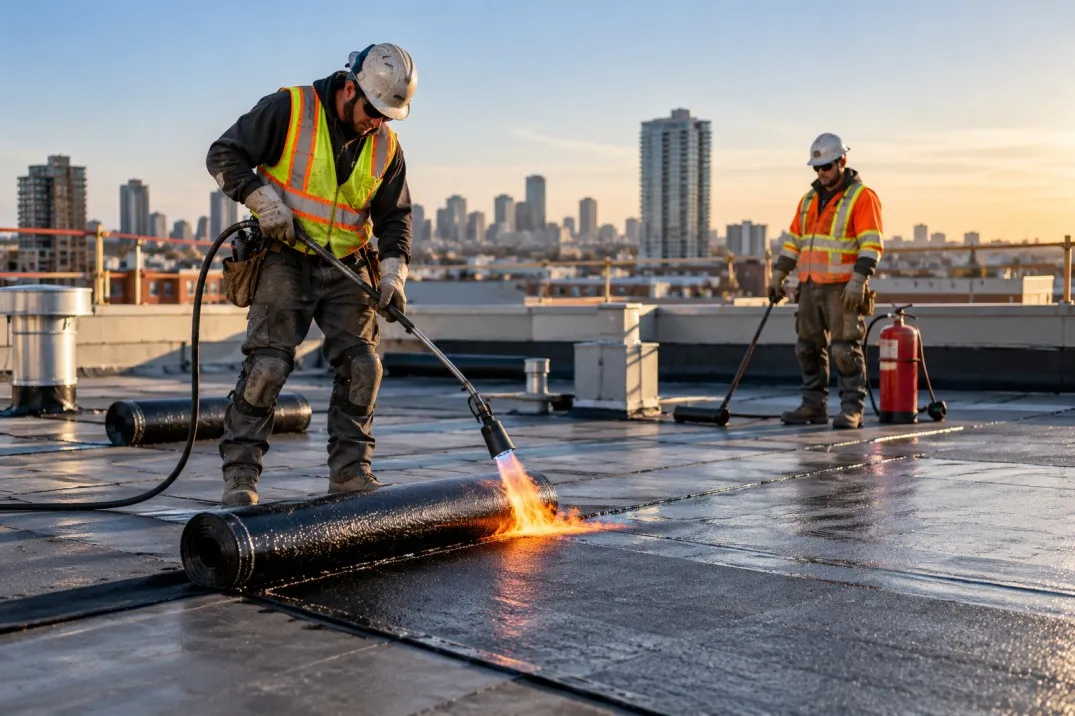
Torch-applied membranes are proven and durable, and they are also open flame on top of your building, so the safety plan deserves the same scrutiny as the product choice.
Torch-applied roofing has a long record on Calgary buildings. The membrane is heated with a propane torch as it is rolled out, and the heat melts the underside into a continuous, bonded sheet. Done well, the result is a tough, waterproof roof with strong seams. Done carelessly, it is a fire waiting for a quiet moment.
Building owners and facility managers are not expected to run the torch, but they are expected to know what a responsible crew brings to site. A safety plan for hot work is a short list of items that you can check before the first roll goes down. Here is what you should expect to see, and why each piece matters.
Why Open Flame on a Roof Is Different
A roof is full of combustible material. There is the old membrane, the insulation, the wood nailers, the felt and the building itself, and on some older properties the deck is wood or contains a combustible layer. A flame near any of that needs a plan. Heat can travel through a gap in flashing, along a pipe or under a curb, and smoulder for hours before anyone sees it.
That delayed ignition is what separates roofing fires from other kinds. The crew can leave the roof, the site can look quiet, and a hidden ember can still be working its way through insulation or a void. Every serious safety program for torch work is built around that delay. It is why the plan must cover the hours after the torch goes out, and not just the hours with the flame lit.
The Hot Work Permit
A hot work permit is a written authorization that confirms the area has been checked, the precautions are in place and a responsible person has signed off. It does not need to be a heavy document. It should name the location, the date, the work being done, the people involved and the safety steps taken.
Ask who issues the permit. On a larger property the owner or the property manager may have a hot work procedure of their own, and the contractor should follow it. On smaller sites the contractor often issues the permit and shares a copy with the owner. Either way, you should see a copy before work begins. If a crew arrives and cannot show you a permit process, treat that as a warning about the rest of their practice.
Extinguishers, Water and Equipment on the Roof
The roof itself should have fire extinguishers within easy reach of the crew, rated for the kinds of fire likely to occur, and positioned so that no one has to cross the work area to reach them. Each torch operator should have one close by, and there should be spares at the access point. The crew should check them before work starts and they should be tagged and in date.
Beyond extinguishers, look for a way to deliver water quickly. A charged hose, a water can or a pump sprayer gives the fire watch a tool for dampening hot spots and wetting down a questionable area. Propane cylinders should be stored upright, secured and kept away from flame and heat. Torches and hoses should be inspected before use. None of this is exotic, and a good crew can describe their setup in a couple of minutes.
Fire Watch: How Long After the Last Torch
Fire watch is the period after hot work ends when someone stays on site to look for smoke, heat or flame. A trained person checks the work area, the underside of the roof where accessible, and nearby spaces such as attics and mechanical rooms. The watch should be a dedicated duty and not something the foreman squeezes in while loading the truck.
The length of the watch depends on the permit, the insurer and the building. A common practice is to keep the watch going for a period after the last flame is out and then to return for a later check. Your insurer may set a specific minimum. Ask the contractor what duration they plan, and compare that with what your policy and your own hot work procedure require. If the numbers do not match, resolve the difference before work starts. Longer is safer, and it is cheap compared with a claim.
Combustible Decks and Details That Need Extra Care
Not every roof is a good candidate for a direct torch. A wood deck, a roof with combustible insulation or a detail with tight gaps and voids calls for extra precaution. Many contractors will use a base sheet that is mechanically fastened or cold-applied under the torched cap so that flame never touches the deck. Others will choose a different application method altogether, such as hot asphalt or self-adhered membranes at certain details.
Penetrations, parapets and curbs need attention. A pipe that passes through the deck can carry heat into the interior. A parapet that has wood blocking behind the flashing can hold an ember. The plan should say how these locations will be shielded, checked and monitored. A contractor who has thought it through will talk about specific details instead of general promises.
Weather, Wind and Calgary Conditions on the Day
Torch work in Calgary has to respect the weather. Wind is the first concern. A strong Bow Valley gust can push flame sideways, blow sparks onto neighbouring roofs and make it hard to keep the torch under control. A responsible crew will stop work when gusts rise and will not argue about it.
Cold is the second. Membrane rolls stiffen in low temperatures, and crews sometimes push the torch harder to get a bond. Overheating damages the sheet and raises the chance of a flare-up at a seam. Moisture matters as well, because a damp substrate traps steam under the membrane. Ask the contractor what temperature and wind limits they work to, and what happens to the schedule when conditions drift outside them.
Short November daylight adds pressure. A crew racing the sunset may skip the last checks. The plan should set a stop time that leaves enough daylight for the closing walk and the start of the fire watch, so that nobody is rushing the most important hour of the day.
Tenants, Neighbours and Communication
Hot work affects more people than the roofing crew. Tenants below should know when the work happens, where to find the nearest exit and whom to call if they smell smoke. Neighbouring properties deserve notice when the roof sits close to theirs. Air intakes near the work area may need to be covered or shut down so fumes do not draw into the building. A short written notice a few days ahead, followed by a reminder on the morning of the work, prevents most of the confusion.
Insurance, Contracts and Documentation
Before a torch comes out, confirm that your own insurer knows about the work. Some policies require notice, some set conditions on hot work and some exclude losses that arise from a failure to follow stated precautions. Your contractor should carry general liability coverage and be willing to supply a certificate. Superior Roofing carries a $10 million liability policy, and you should expect any contractor you hire for this kind of work to demonstrate coverage that fits the risk.
Keep the paper trail. The permit, the fire watch log, the extinguisher checks and the daily site notes should all be available at the end of the job. If anything goes wrong later, those records show what was done. They also help you refine your own process for the next building.
Ask Early, Check Often
Torch application is a legitimate and well-proven method, and many roofs in Calgary have been built that way for good reason. The method asks for discipline, and discipline is something you can verify. A short conversation before the work starts, followed by a look at the permit, the extinguishers and the fire watch plan, tells you a great deal about the contractor you have hired.
If you are weighing options for a low-slope building, learn how SBS modified bitumen roofing in Calgary can be installed, because torching is one choice among several and the safest method depends on your deck, your insulation and your insurer. Ask for the plan in writing, ask who stays on site after the flame is out, and do not let the schedule talk you out of either answer.
About the author: this article was contributed by Superior Roofing in Calgary, where Red Seal journeymen install SBS modified bitumen and other low-slope systems under written hot work procedures, and the company carries $10 million liability insurance for commercial work.