How Pets, Remodeling, and Everyday Dust Affect Residential Ductwork
By Abdus Salam
62 Views
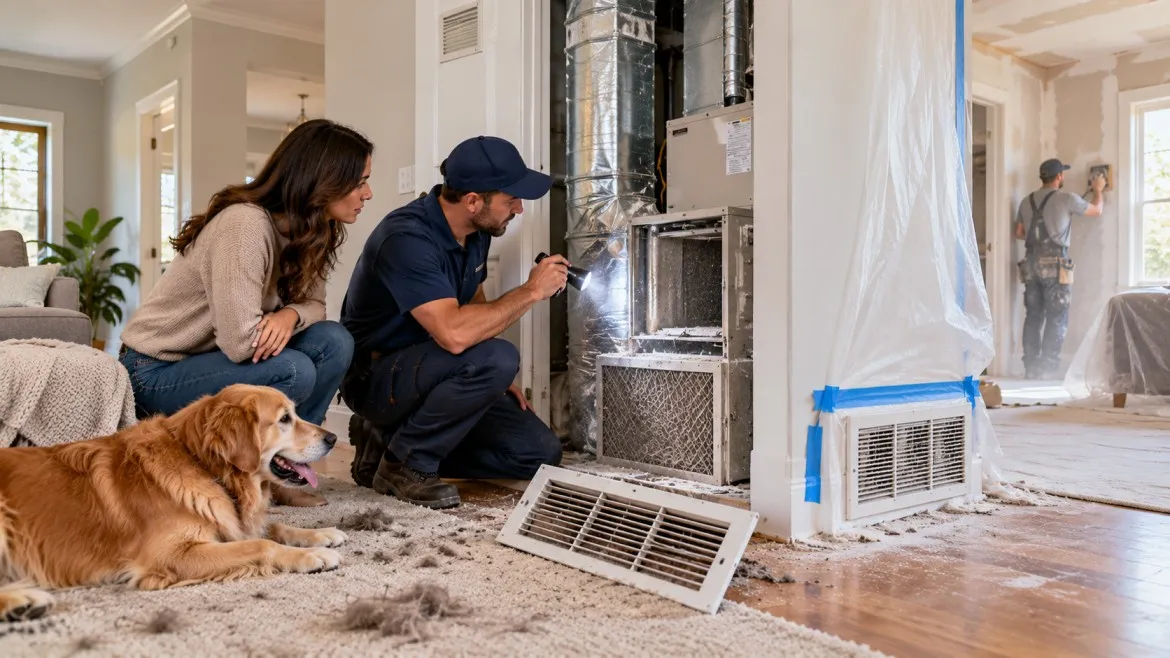
When you look around your home on a sunny afternoon, you might see sunlight filtering through the windows, illuminating a tiny cloud of floating dust particles. It is easy to wipe down the coffee table or run a vacuum over the rug, but what happens to all the microscopic debris that disappears from sight? Every single day, your heating, ventilation, and air conditioning system draws in thousands of cubic feet of air to keep your living space comfortable. Along with that air comes a continuous mixture of shedding pet hair, microscopic dander, fine drywall dust, and routine household soil. Over time, these daily contaminants collect deep inside your air distribution network, transforming your hidden ductwork into a dense repository for indoor pollutants.
The Daily Burden of Pet Dander and Fur
Living with four-legged family members brings endless joy, but it also presents a continuous challenge for your ventilation system. Even pets that do not appear to shed heavily constantly release microscopic dander, dried saliva particles, and fine undercoat hair into the environment. Because your HVAC system operates on a continuous loop, drawing air through return grilles and pushing it back through supply vents, a significant portion of this organic material gets pulled directly into the ductwork.
As pet fur travels down main return trunks, it acts like a magnet for other airborne particles. Fur lodges in the corners of flexible branch lines, clings to turning vanes, and wraps around internal damper hardware. Over months of continuous operation, these fur clusters catch fine dust and skin flakes, building thick mats that restrict airflow. When humidity levels rise, this organic layer traps moisture, creating a persistent, stale pet odor that recirculates through every room whenever the blower motor kicks on.
The Heavy Impact of Home Remodeling and Renovations
If you have ever completed a kitchen remodel, updated your bathroom tile, or installed new hardwood floors, you know that construction dust possesses an uncanny ability to coat every surface in the house. What many homeowners do not realize is that the most damaging dust settles where you cannot see it. During active sanding, saw cutting, or drywall finishing, millions of microscopic gypsum, masonry, and wood particles become airborne.
Even if you cover your furniture or turn off the thermostat during the messiest phases of work, passive air currents carry fine renovation dust straight into open floor registers and return cavities. Unlike soft household dust, construction debris is heavy, highly abrasive, and prone to caking when exposed to ambient humidity. This fine powder coats the inner walls of sheet metal trunks, settles into the corrugated ridges of flex ducts, and coats delicate blower wheel blades. Long after the contractor leaves, every system cycle sends fine gypsum powder floating back onto your freshly renovated surfaces.
How Everyday Household Dust Accumulates Over Time
Even in a home without pets or recent renovation projects, routine living generates a surprising volume of airborne particulate matter. Standard household dust is a complex mixture of sloughed skin cells, outdoor soil, carpet fibers, clothing lint, and pollen tracked in on shoes. Your central furnace or air conditioner acts as a giant lungs for the house, constantly inhaling this ambient air and passing it through filter racks and duct channels.
While a clean, properly rated air filter captures larger particles, smaller microscopic solids inevitably bypass the filter frame edges or slip through loose media. These escaping particles settle on the lower surfaces of horizontal supply trunks and return boxes. Over years of normal household activity, this slow, steady accumulation creates a thick, blanket-like layer of dirt. This buildup acts as static friction against moving air, forcing your blower motor to work harder and reducing overall thermal efficiency throughout your home.
Structural Hazards and Reduced Mechanical Efficiency
Allowing pet fur, renovation powder, and daily dust to build up inside your ventilation network creates far more than just an aesthetic issue. As contamination thickens inside the supply branches, the internal diameter of the duct line narrows, creating high static pressure within the system. This resistance restricts proper airflow, forcing your heating and cooling equipment to run longer cycles to reach the set temperature on your thermostat.
Furthermore, fine dust that bypasses return lines lands directly on the delicate aluminum fins of your evaporator coil and coats the internal blower components. An evaporator coil insulated by a layer of grime cannot properly transfer heat, which causes system temperatures to plunge and often leads to frozen refrigerant lines. When mechanical components operate under constant strain and restricted airflow, energy consumption skyrockets, and major mechanical parts suffer premature wear and tear.
Restoring Airflow Balance Through Deep System Cleaning
Tackling years of accumulated pet hair, renovation grit, and household dust requires a comprehensive mechanical approach rather than a simple surface sweep. Professional technicians use specialized negative air containment equipment to place the entire duct system under continuous vacuum pressure. This prevents dislodged dust from escaping into your living space during the service.
Once negative pressure is established, technicians feed flexible agitation tools, such as pneumatic air whips and forward-sweeping nozzles, deep into every supply and return branch. These high-pressure air tools dislodge stubborn drywall powder and scrub heavy pet hair mats from the inner walls without damaging delicate duct materials. For property owners seeking to eliminate lingering construction grit or pet dander, scheduling a professionalresidential air duct cleaning provides the thorough extraction needed to restore mechanical balance and deliver fresh, clean air throughout the property.
Reclaim Your Indoor Air and Protect Your Investment
Your air distribution system plays a critical role in maintaining a comfortable, healthy indoor environment, but it cannot perform effectively when clogged with pet fur, construction debris, and years of everyday dust. By understanding how daily life impacts your hidden ductwork, you can take timely action to protect your mechanical equipment and improve your home breathing environment. Investing in professional mechanical extraction removes stubborn blockages, lowers operating strain on your HVAC unit, and ensures your family enjoys fresh, clean airflow in every room. Reach out to a qualified duct specialist today to inspect your system, clear away hidden contaminants, and restore your home indoor air quality.