How Pressure-Resistant Materials Protect Watches at Extreme Depths
By Lois Wilson
1112 Views
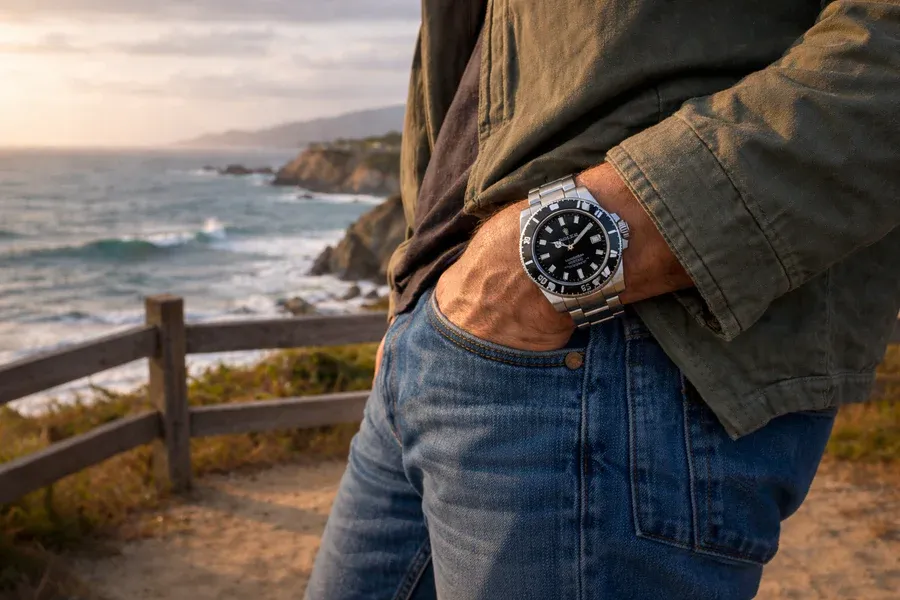
The ocean is a beautiful yet unforgiving environment. For centuries, explorers have been drawn to the deep, testing the limits of human endurance and engineering. While a human diver requires highly specialized submersibles or heavy atmospheric suits to survive the crushing weight of the deep ocean, a luxury dive watch must withstand those exact same forces while remaining elegant enough to wear to a high-powered business lunch. The engineering required to keep a mechanical movement ticking thousands of feet below the surface is nothing short of miraculous, relying on cutting-edge metallurgy and structural design.
For the collector of fine timepieces, understanding this deep-sea engineering adds a rich layer of appreciation to a watch. A true deep-sea instrument is not just an aesthetic choice; it is a micro-engineered survival pod for a delicate mechanical heart. When you strap on a watch built for extreme depths, you are wearing decades of physics-defying innovation on your wrist.
The Crushing Reality of Hydrostatic Pressure
To understand how pressure-resistant materials protect a watch, it helps to visualize what happens as you descend into the ocean. At sea level, air exerts a comfortable amount of pressure on our bodies. However, water is much heavier than air. For every thirty-three feet you drop below the surface, the pressure increases by an entire atmosphere. By the time you reach thousands of feet down, the forces pressing against a watch case are equivalent to having an industrial hydraulic press or an entire elephant balancing on a surface no larger than a postage stamp.
Without highly specialized materials, a standard watch case would simply implode. The sapphire crystal would shatter into dust, the steel case back would warp inward, and the delicate gear train inside would be crushed instantly. Deep-sea watchmaking is an architectural battle against this immense weight, requiring materials that refuse to bend, flex, or crack under global-class burdens.
The Architecture of the Super Steel Case
The first line of defense against the crushing dark is the watch case itself. While standard luxury watches often utilize high-quality marine-grade stainless steel, deep-diving timepieces push material science even further. Master watchmakers frequently turn to proprietary alloys or hyper-dense steel blends like 904L stainless steel. This particular alloy contains higher amounts of chromium, molybdenum, and nickel, which gives it an incredibly dense molecular structure that resists deformation under extreme load while providing unparalleled resistance to saltwater corrosion.
A legendary example of this unyielding engineering is theRolex Sea Dweller Watch, a timepiece that redefined the capabilities of deep-sea exploration. Built to endure depths that would crush lesser instruments, its case architecture relies on structural thickness and perfect geometry to distribute immense force evenly around the movement. Wearing one is a constant reminder that luxury does not have to be fragile; it can be utterly indestructible.
The Chemistry of Sapphire Crystals and Ceramic Bezels
The crystal protecting the dial is often the most vulnerable point of a watch because it must remain perfectly transparent while bearing the brunt of the ocean’s weight. Standard glass or acrylic would fail long before reaching severe depths. To counter this, elite dive watches utilize synthetic sapphire crystals that are grown in laboratories and diamond-cut to precise dimensions. These crystals are significantly thicker than those found on standard dress watches, sometimes measuring several millimeters thick, and are slightly domed to deflect incoming pressure outward toward the reinforced steel bezel.
Surrounding the crystal, the rotating bezel faces its own challenges. Modern deep-sea watches often swap out traditional aluminum bezel inserts for high-tech ceramics. These ceramic materials are baked at scorching temperatures to achieve a hardness that scratches only when met with a diamond. This ensures that even if you scrape your watch against a jagged coral reef or the metal frame of a diving bell, the bezel will emerge looking completely flawless.
The Ingenious Physics of the Helium Escape Valve
When commercial divers spend days or weeks living inside pressurized underwater habitats, they breathe a special gas mixture rich in helium. Because helium molecules are among the smallest in the universe, they easily slip past the rubber gaskets of a watch and enter the case. As the divers return to the surface and the surrounding pressure drops, the trapped helium gas expands rapidly inside the watch. Without an escape route, the expanding gas will blow the sapphire crystal clean off the front of the watch like a champagne cork.
To solve this explosive problem, watch engineers developed the automatic helium escape valve. This tiny, spring-loaded mechanism opens automatically when the internal pressure exceeds a certain threshold, safely venting the helium molecules while remaining completely watertight from the outside. It is a brilliant bit of passive engineering that functions like a mechanical release valve for your timepiece, ensuring survival during decompression.
Safeguarding the Gaskets and Crown Assembly
Even the strongest steel and thickest sapphire are useless if water finds a way to seep through the seams. The entry points, specifically the case back and the winding crown, require advanced sealing systems. Dive watches utilize synthetic rubber and silicone O-ring gaskets that sit inside precision-machined grooves. When the case back is screwed down tightly, these gaskets compress to form an airtight and watertight barrier that actually seals tighter as the external water pressure increases.
The crown assembly acts as a literal gatekeeper for the movement. High-depth timepieces employ triple-locking crown systems that feature multiple internal gaskets. When the crown is screwed down securely against the case, it locks the watch like a submarine hatch. This meticulous attention to detail ensures that the mechanical movement remains completely dry, pristine, and perfectly isolated from the chaotic forces of the deep.
Choosing Your Next Masterpiece of Engineering
Acquiring a luxury timepiece engineered for the deep ocean is about more than just owning a rugged tool. It is about appreciating a masterclass in human ingenuity, physics, and uncompromising style. These watches are built to outlast their owners, serving as mechanical monuments to what can be achieved when science meets high art. If you are ready to explore these incredible feats of horological engineering in person and find the perfect model for your collection, we invite you to consult with our experts at this premier Manhattan location. Finding a timepiece that speaks to your sense of adventure ensures that you will always navigate life’s depths with absolute confidence.