The Four Latest Innovations in Hotel Guest Technology
By Abdus Salam
1274 Views
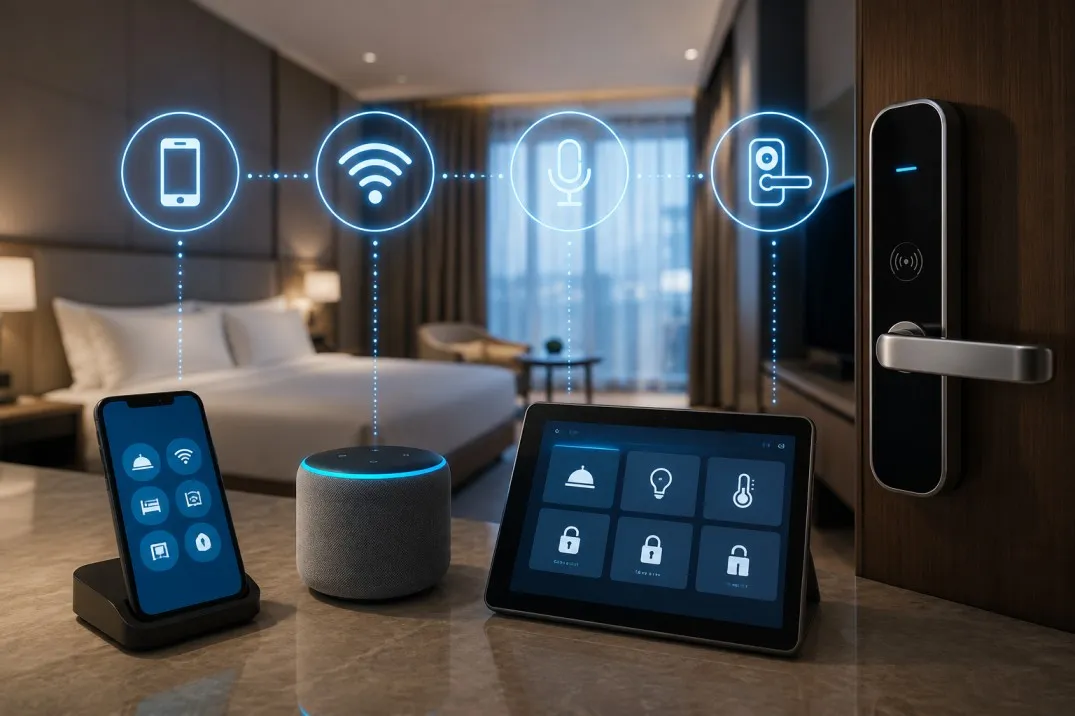
Hotel guest technology is entering a new phase. After years of focusing primarily on contactless check-in and faster Wi-Fi, hotels are investing in connected systems that make the entire stay more convenient, personalized, and intuitive.
The most important hotel technology innovations in 2026 include artificial intelligence (AI), mobile room access, secure content casting, smart-room controls, and more responsive digital services. Together, these technologies help hotels remove friction without removing the human element that defines hospitality.
AI-Powered Guest Assistance Becomes More Practical
Artificial intelligence is rapidly expanding beyond basic website chatbots. Hotels can now use AI-powered virtual concierges to answer common questions, recommend restaurants, explain property amenities, translate conversations, and help guests request services.
Generative AI can make these interactions more conversational and context-aware. For example, instead of simply listing nearby restaurants, an AI concierge may suggest a family-friendly option within walking distance that can accommodate a dietary restriction.
The goal isn’t to replace hotel employees. It’s to handle routine questions quickly, giving staff more time to assist guests with situations that require empathy, judgment, or personal attention.
Mobile Technology Connects the Guest Journey
Hotel mobile applications are becoming central hubs for the guest experience. Guests can increasingly use their phones to check in, receive room-ready notifications, access digital room keys, communicate with hotel teams, and request amenities.
Marriott, for example, offers mobile check-in, Mobile Key, service requests, and direct communication with hotel associates through its digital platform. These tools allow guests to manage practical parts of their stay without waiting at the front desk.
The latest mobile systems also provide greater flexibility. Guests can choose self-service when they value speed while still visiting the front desk when they prefer personal interaction.
Secure Streaming Comes to Hospitality TVs
One of the most visible recent innovations is the arrival of integrated casting on hospitality TVs. Guests increasingly expect to watch the same streaming services in a hotel that they use at home.
New hospitality displays can support technologies such as Google Cast and Apple AirPlay, allowing guests to stream content from compatible personal devices. Samsung’s recent hospitality TV platforms also include over-the-top (OTT) applications, Smart Hub functionality, and centralized display management.
Privacy is essential. Modern hotel casting systems are designed to disconnect the guest’s device and remove pairing information at checkout, helping prevent the next occupant from accessing a previous guest’s accounts.
Smart Rooms Respond to Individual Preferences
Connected-room technology is also giving guests more control over their environment. Through a hotel app, bedside panel, voice interface, or hospitality TV, guests may adjust lighting, temperature, curtains, and entertainment settings.
When these systems connect securely with the property management system, hotels can prepare rooms more effectively. Lighting and climate settings may be activated before arrival, while unoccupied rooms can return to energy-efficient settings after checkout.
The best smart-room systems keep controls simple. Technology should make the room easier to use, not force guests to learn an unfamiliar collection of apps and interfaces.
The Future Is Connected, but Still Human
The most promising hotel guest technology doesn’t call attention to itself. It works quietly in the background, helping guests enter their rooms, find information, personalize their environment, and enjoy their preferred entertainment.
For hotel owners and operators, successful implementation depends on more than selecting the newest device. Mobile platforms, hospitality TVs, property systems, networks, and cybersecurity measures must work together reliably.
As these innovations continue to develop, the hotels that benefit most will be those that use technology with a clear purpose: eliminating unnecessary friction while giving employees more opportunities to deliver genuine hospitality.