The Tech Stack Behind a Modern Chauffeur Service
By Abdus Salam
28 Views
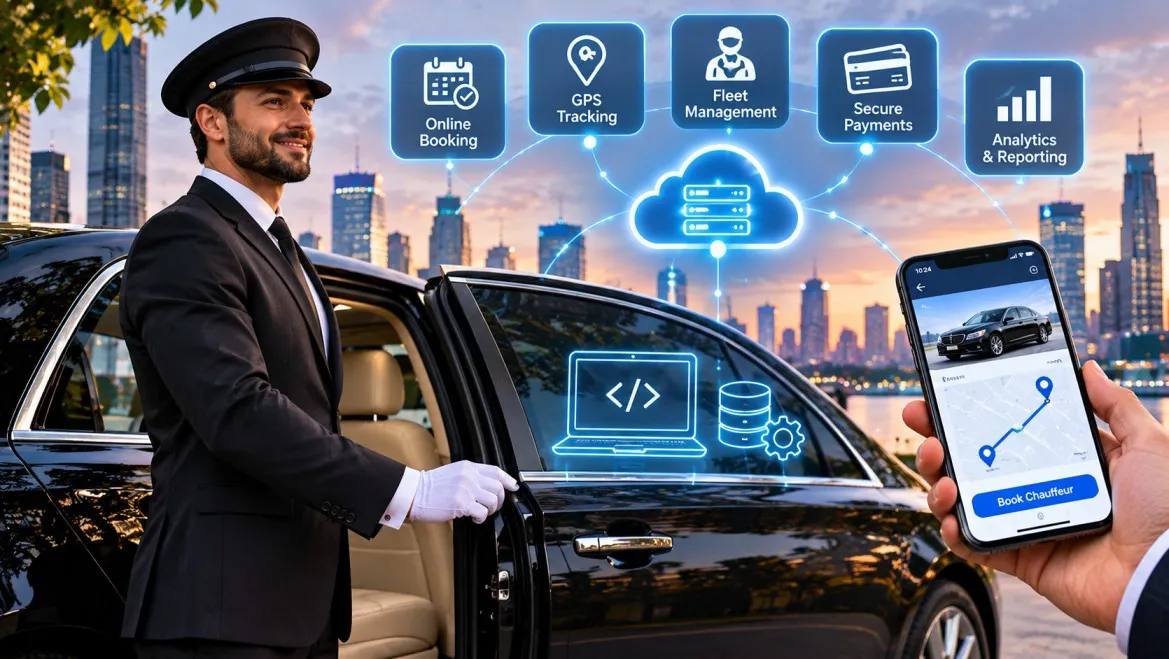
Ride-hailing apps taught everyone to expect a car at the tap of a button. What's less visible is how much software now runs the traditional end of the market: chauffeur and limousine companies that pre-book rides, often hours or days ahead, and promise to be waiting when your flight lands. Their problem looks simple but is surprisingly hard to solve: get the right vehicle to the right place at the right time, when the "right time" keeps moving.
A good real-world example is a regional airport-transfer operator. Seattle's https://www.seattlestowncar.com, for instance, advertises flight monitoring and a guarantee that the ride is free if the driver is more than 15 minutes late. A promise like that only works with a reliable data pipeline behind it. Here's roughly what that stack looks like.
Flight data as a live input
The core challenge in airport transfers is that the pickup time in the booking is almost always wrong. Flights land early, land late, divert or get cancelled. Modern dispatch systems subscribe to flight status feeds from commercial aviation data providers and match each booking to a flight number. When an arrival estimate changes, the pickup time updates automatically and the assigned driver gets a notification.
The interesting engineering is in the edge cases: codeshare flight numbers that map to the same aircraft, overnight delays that push a booking into the next shift, and the gap between "landed" and "passenger at the curb," which can range from ten minutes to over an hour depending on customs and baggage. Good systems learn typical deplaning times per airport and terminal, not just per flight.
Dispatch as a scheduling problem
Assigning drivers to rides is a variant of the vehicle routing problem with time windows, a classic NP-hard optimisation challenge. Each driver has a shift, a location and a vehicle type. Each job has a pickup window, a passenger count, a luggage requirement and sometimes a requested vehicle class. Real-world dispatch tools usually combine heuristics with human oversight: the software proposes assignments and an experienced dispatcher adjusts for things the model doesn't know, like a driver who's familiar with a particular corporate client.
Traffic data adds another layer. Travel-time estimates from mapping APIs are fed in so the system can flag when a driver's previous job is likely to make them late for the next one, early enough to reassign.
Fleet telematics
GPS trackers in each vehicle stream location, speed and engine diagnostics back to the operations dashboard. That enables live ETA updates to passengers, but it also supports maintenance. Fault codes and mileage data can trigger service appointments before a breakdown happens. Some fleets also score driving behaviour from accelerometer data, such as harsh braking, rapid acceleration and speeding, to support driver coaching and help with insurance.
The customer-facing layer
On the front end, the expectations set by consumer apps apply: online booking with instant quotes, automated confirmations, SMS updates with the driver's name and vehicle, and a link to track the car on approach. Fixed pricing is a notable difference from ride-hailing. The quote is calculated at booking time from zones or distance, so the rate stays the same whatever the traffic or demand on the day. That requires a rules engine for zones, vehicle classes, airport fees and waiting-time policies.
Integrations that tie it together
The glue is usually a set of APIs: payment processing, CRM for corporate accounts, accounting exports and sometimes direct integrations with travel management platforms used by business clients. Many smaller operators run on specialised SaaS platforms built for the limousine industry instead of building everything in-house, then customise the parts that make their service different.
Why it matters
From the passenger's side, none of this is visible, and that's the point. The value of the tech stack shows up as an absence of problems: no driver waiting at the wrong time, no phone calls to ask where the car is, no surprise on the invoice. It's a good reminder that some of the most effective software works quietly in the background of very old-fashioned businesses.